
The Uncomfortable Truth About Your Current Pricing
Premium Pricing: Competing on price is like bringing a butter knife to a gunfight. Technically, it’s possible, but why would you want to?
The Wikipedia definition of Premium Pricing
What Exactly Does Premium Pricing Mean To You? (And Why Most People Get It Wrong)
Premium pricing isn’t just “charging more because we feel like it.” It’s a sophisticated strategy where you set higher prices based on superior perceived value, not just higher costs or competitor benchmarking.
Think Apple didn’t accidentally stumble into charging $1,200 for a phone that costs $400 to make. They mastered the art of premium pricing through careful brand positioning, customer psychology, and value communication.
Key Elements of Premium Pricing:
Learn the fundamentals in our complete guide to What Is Premium Pricing?
The Compelling Case for Going Premium
Here’s what happens when you implement a proper premium pricing strategy:
Your Profit Margins Stop Being a Sad Joke
Instead of selling 1,000 units at $10 profit each, you sell 300 units at $50 profit each. The result is the same revenue with 70% fewer headaches.

You Attract Better Customers
Premium pricing naturally excludes tire-kickers, price shoppers, and customers who demand refunds for “buyer’s remorse.” You get clients who value quality over cheapness.
Your Team Stops Feeling Like They Work at a Discount Store
When you charge premium prices, you can afford premium talent, service, and everything else. Your employees want to work there.
Discover all the Benefits of Premium Pricing for your business
When Premium Pricing Makes Perfect Sense (And When It’s Career Suicide)
Not every business should charge premium prices. If you sell commodity products in hyper-competitive markets with zero differentiation, premium pricing will land you in bankruptcy court faster than a crypto investment in 2022.
Premium Pricing Works When:
- Your product or service has clear, demonstrable differentiation
- You can create or communicate superior value propositions
- Your target market prioritizes quality over price considerations
- You have strong brand equity or expert positioning
- Competition is based on value, not just price comparisons
Avoid Premium Pricing If:
- You’re operating in pure commodity markets with no differentiation
- Your brand is unknown or has a poor reputation
- Your target customers are extremely price-sensitive
- You can’t articulate apparent value differences from competitors
The key to understanding premium pricing is honest market assessment, not wishful thinking.
Let’s destroy some fairy tales that prevent innovative CEOs from charging what they’re worth:
Myth #1: “Customers always choose the cheapest option”
Reality: Customers choose the option with the best perceived value-to-price ratio.
Myth #2: “Premium pricing only works for luxury brands”
Reality: B2B services, software, and countless “ordinary” businesses use premium pricing successfully.
Myth #3: “We’ll lose all our customers if we raise prices”
Reality: You’ll lose some customers, but the ones who stay will be more profitable and less demanding.
Get the complete breakdown of When to Use Premium Pricing
Please read our complete guide to Common Myths About Premium Pricing
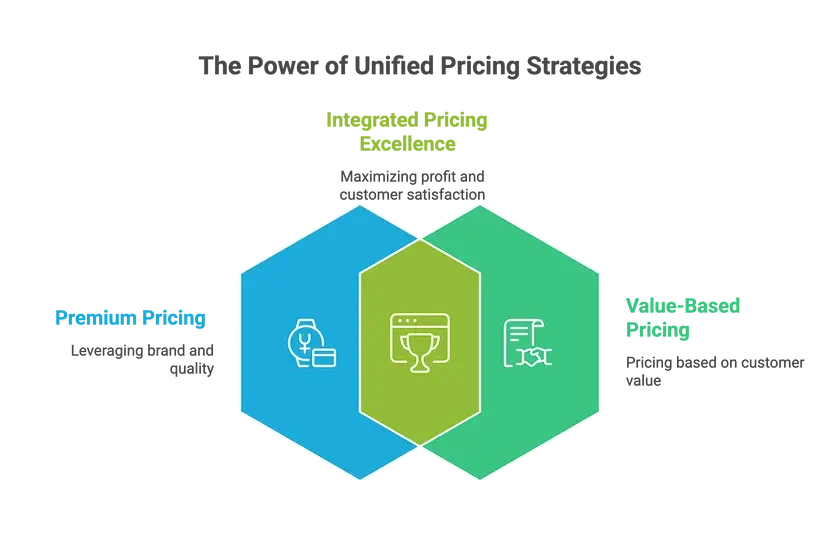
Here’s where many businesses get confused. Premium pricing and value-based pricing are cousins, not twins.
Premium Pricing: Setting higher prices based on brand, perceived quality, and market positioning.
Value-Based Pricing: Setting prices based on the specific value delivered to customers or segments.
You can use both simultaneously. The most successful companies do.
Explore strategies for B2B Markets, B2B Pricing, SaaS & Tech, Services, and Consumer Goods
Industry-Specific Premium Pricing Strategies
Premium pricing isn’t one-size-fits-all. What works for SaaS companies differs from that for consultants or consumer goods.
The Psychology Behind Premium Pricing
Your customers’ brains are weird. They’ll pay $5 for coffee at Starbucks but complain about $3 coffee at the corner deli. Understanding customer psychology is crucial for premium pricing success.
Key Psychological Triggers:
Master Psychological Triggers in Premium Pricing and The Role of Scarcity
Understand the nuances of our Premium vs. Value-Based Pricing comparison [nothing found]
Real-World Success Stories
Premium pricing isn’t theoretical. Companies across industries have used these strategies to improve profitability dramatically:
Read detailed Case Studies in Premium Pricing Success
The Dark Side: Premium Pricing Mistakes That Kill Businesses
Premium pricing done wrong is worse than budget pricing done right. Here are the landmines to avoid:
Avoid disaster with our guide to Premium Pricing Mistakes
Making the Transition: From Commodity to Premium
Moving from competitive pricing to premium pricing requires strategy, not just courage. Here’s the roadmap:
Master the transition with Testing Premium Pricing Models and Transitioning to Premium Pricing
Communicating Premium Value Without Sounding Like a Used Car Salesman
The difference between premium pricing and overpricing often comes down to communication. Your messaging must justify your premium prices without sounding desperate or defensive.
Effective Premium Value Communication:
Master this crucial skill with Communicating Value in Premium Pricing
Frequently Asked Questions about Premium Pricing and Premium Positioning
What is a premium pricing strategy?
A premium pricing strategy is a deliberate approach where businesses set prices above market average to signal superior quality, expertise, or exclusivity. Rather than competing on cost, companies using premium pricing compete on value—attracting customers who associate higher investment with better outcomes and are willing to pay for demonstrated excellence.
What is premium pricing?
Premium pricing is the practice of setting prices higher than competitors’ based on perceived value rather than production costs. It works by positioning products or services as superior alternatives worth the additional investment. Successful premium pricing requires genuine differentiation, strong brand positioning, and customers who prioritise quality over cheapness.
What is premium positioning?
Premium positioning is the strategic foundation that makes premium pricing possible. It encompasses how your brand, messaging, customer experience, and market presence collectively create perceptions of superior value. While premium pricing is your price point, premium positioning is the comprehensive strategy that justifies and sustains that price in customers’ minds.
When should you use premium pricing?
Use premium pricing when your offering has clear differentiation, your target market values quality over cost, and you can articulate specific value that justifies higher investment. Premium pricing works best for businesses with strong brand equity, demonstrable expertise, or unique solutions—and fails when applied to undifferentiated commodities or price-sensitive markets.
The Future of Premium Pricing
Premium pricing strategies continue evolving. Current trends include:
Stay ahead of the curve with Future Trends in Premium Pricing
Your Next Steps: Stop Competing on Price
Premium pricing strategy isn’t about greed; it’s about being smart. When you charge what you’re worth, you can deliver what customers want: superior products, better service, and real value.
The companies thriving in today’s economy aren’t the cheapest – they provide the most value and charge accordingly.
Ready to implement premium pricing? Start by understanding your customer perception, auditing your value proposition, and testing higher price points with new customer segments.
Your profit margins will thank you, your stress levels will thank you, and yes, even your customers will thank you, because premium pricing allows you to deliver the premium experience they want.
According to research by McKinsey & Company, companies that successfully implement premium pricing strategies see profit margins increase by 2-7% on average, while often improving customer satisfaction scores due to enhanced service capabilities enabled by higher margins.
Busting the Myths That Keep You Broke
Premium vs. Value-Based Pricing: What’s the Difference?
For B2B Markets
Focus on ROI, reduced risk, and business outcomes. B2B buyers care more about results than price tags.
For Consumer Goods
Brand positioning, quality perception, and emotional connection drive premium pricing success.
Professional Services
Position expertise, results, and exclusive access. Your brain is the product – price it accordingly.
For SaaS and Tech
Leverage feature differentiation, superior user experience, and outcome-based value propositions.