Why Consumer Goods Companies Are Missing Millions in Margins
If you run a consumer goods company and say, “We’re 20% cheaper,” you’re racing to the bottom. The only winner is the customer’s wallet. The only loser? Your profit margin.
Nielsen’s Global Premium Products Report shows that 73% of consumers worldwide might change their habits for the environment. They’re also willing to pay more for products that align with their values. Yet, most companies still compete on price like it’s 1995.
Here’s the uncomfortable truth: Your customers aren’t just buying your product. They’re buying a better version of themselves.
That $3.99 shampoo buyer? He’s buying a “smart financial decision maker.” The $47 Olaplex buyer? She’s buying “someone who invests in quality and deserves the best.”
Both strategies position products as premium. Only one makes you rich.
The Consumer Psychology Minefield (and How to Navigate It Without Blowing Up Your Business)
Premium pricing isn’t just about raising prices and hoping for the best. It’s about understanding the quirky, often irrational ways we decide to buy.
Stop Leaving Money on the Table
The P.R.O.F.I.T. Premium Framework™ Revealed
Most CEOs treat premium pricing like throwing spaghetti at a wall. They hope something sticks. Some raise prices, some add features, but most fail.
I’ve cracked the code after 15 years of helping consumer goods companies escape the price-war quicksand. It’s not about charging more. It’s about deserving more.
The P.R.O.F.I.T. Premium Framework™ isn’t theory. It’s battle-tested on brands from $10 million startups to $500 million giants. Companies using this framework see average margin increases of 23-47% within six months.
Here’s why it works: Premium pricing isn’t a pricing strategy. It’s a profit optimization system.
P – Psychology-Driven Positioning
R – Relentless Quality Differentiation
O – Orchestrated Scarcity
F – Fanatic Customer Experience
I – Identity-Based Messaging
T – Trust-Building Social Proof
The Brand as Identity Multiplier
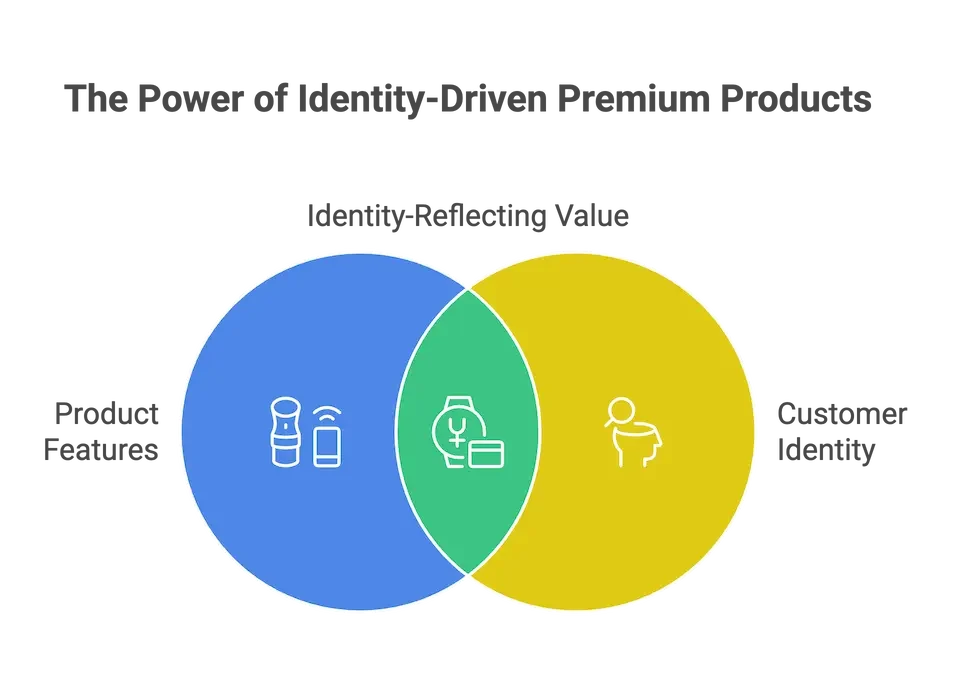
Your customers buy more than just features. They buy a piece of their identity. Premium goods thrive because they help shape how customers see themselves.
Take Apple. They didn’t become a trillion-dollar company by selling cheap computers. They sold computers that made users feel, “I’m creative and better than PC users.” The truth doesn’t matter; it’s the feeling that counts.
The Paradox of Choice: Psychology
Columbia Business School’s research shows that too many options can reduce buying chances. Here’s the twist: When your product stands out as the top choice, you’re not adding to decision fatigue. Instead, you’re helping to solve it.
The Premium Shortcut: “I don’t want to consider seventeen options. I want the best one.”
That’s why luxury brands often have simpler product lines. Hermès doesn’t offer forty-seven handbag styles. They provide a few iconic designs at premium prices; scarcity becomes part of the appeal.
The Four Pillars of Consumer Goods Premium Positioning
Pillar 1: The Quality Promise (That Actually Delivers)
Premium pricing starts with a simple idea: your product must be better. Not “20% more ingredients” better. Not “fancy packaging,” better. It must be meaningfully, noticeably, and defensibly better.
Innovative companies don’t just improve products; they enhance them in ways customers can see, feel, and show off. Dyson didn’t just make better vacuums; they made ones that look like art. Tesla didn’t just make electric cars; they created ones that speed up faster than most sports cars.
The Premium Quality Rule: If you can’t sum up your improvement in one sentence for a skeptical customer, it’s not premium; it’s just pricey.
Pillar 2: The Scarcity Engine
Nothing screams “premium” like “you probably can’t have it.” Limited editions, seasonal releases, and invitation-only access create urgency, boosting pricing power.
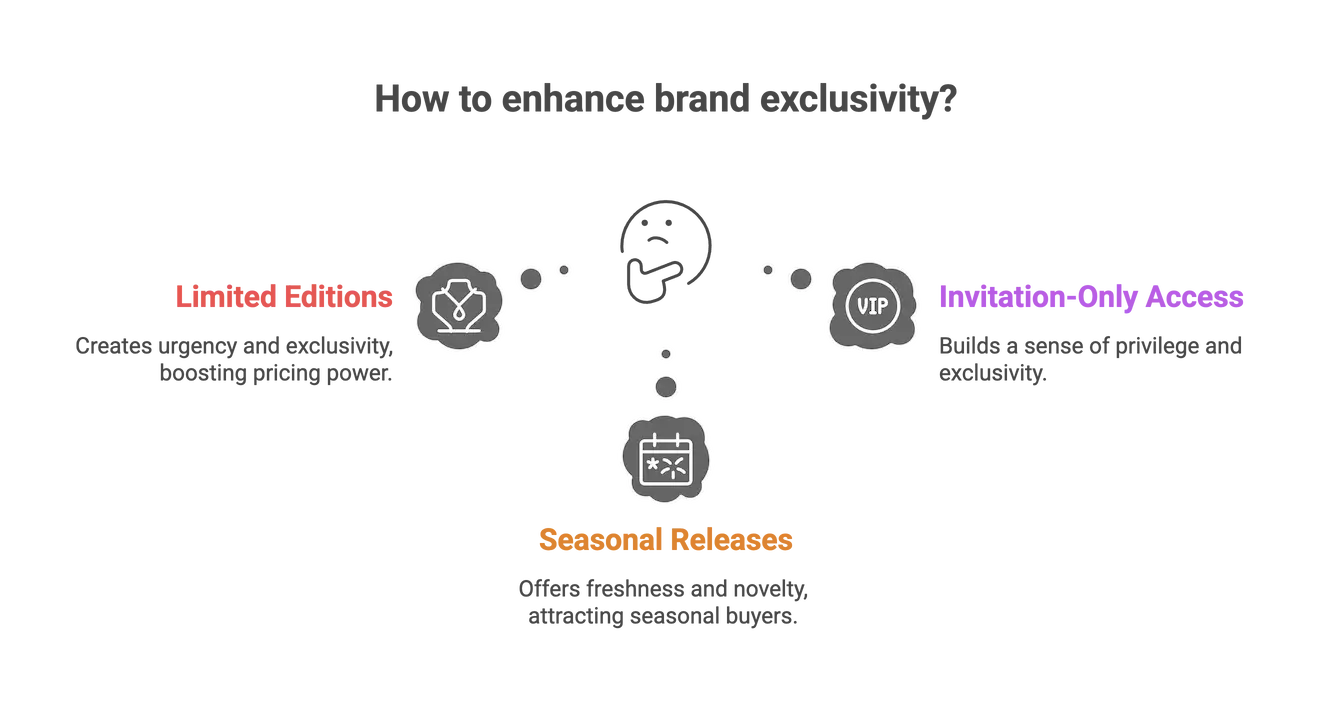
Supreme turned this into an art form. They don’t just sell expensive streetwear; they sell limited items that create a secondary market where $200 hoodies go for $2,000. Scarcity isn’t a bug; it’s the business model.
Pillar 3: The Social Signaling System
Your premium product needs visibility. It should signal status, taste, values, or intelligence to others. That’s why luxury handbags flaunt logos and craft beer brands use fonts that scream “sophisticated taste.”
The Visibility Test: Can people see your product publicly and recognize it as the top choice? If not, you’re missing half the value.
Pillar 4: The Values Alignment Algorithm
Modern consumers, especially millennials and Gen Z, buy based on values. Shoppers will pay more for brands that connect with their values, lifestyle, or care for the planet.
Patagonia charges high prices for outdoor gear. They do this to show their commitment to the environment. Customers aren’t just buying jackets. They’re joining a community that cares about the planet.
The CEO Reality Check: Why Most Premium Pricing Fails
Here’s what separates winners from wannabes in premium pricing: Most CEOs think like accountants, not psychologists.
They see premium pricing as “Cost + Margin = Price.” Wrong. Dead wrong.
Premium pricing is “Value Perception × Emotional Trigger × Scarcity Factor = Price You Can Actually Get.”
The difference? The first formula keeps you broke. The second makes you rich.
I’ve seen $50 million companies stuck selling $5 products because the CEO couldn’t grasp this distinction. I’ve also seen $2 million companies rocket to $20 million because they did.
Which CEO are you?
Industry-Specific Premium Pricing Strategies That Actually Work
Beauty and Personal Care: The Self-Investment Category
The beauty industry is great at premium pricing. It sells products as investments in self-care and confidence. A $200 face cream isn’t just expensive; it’s an investment in how you look and feel.
The Beauty Premium Formula:
- Focus on results, not ingredients.
- Create rituals around usage.
- Partner with influencers who embody aspirational lifestyles.
- Use luxurious packaging.
Food and Beverage: From Commodity to Experience
Premium food brands succeed by turning commodities into experiences. Whole Foods didn’t just sell food; it sold a feeling. Shopping there made you feel special.
The Food Premium Strategy:
- Tell the product’s story.
- Emphasize craft, tradition, or innovation.
- Create limited or seasonal offerings.
- Focus on health, sustainability, or ethical sourcing.
Fashion and Accessories: The Identity Amplifier
Fashion reflects high prices since it is based on the idea that clothes express who we are.
The Fashion Premium Playbook:
- Create a distinct visual identity.
- Build brand mythology.
- Use exclusive distribution channels.
- Collaborate with cultural influencers.
The “Premium Pricing CEO Success Path”
Working with me isn’t consulting. It’s profit engineering.
Most consultants give you reports. I give you results. Here’s how visionary CEOs maximize their investment in premium pricing transformation:
Phase One: The Premium Audit (Week 1-2)
We don’t guess. We measure. I’ll dissect your current positioning, analyze your customer psychology, and identify your most significant profit leaks. Most CEOs discover they’re leaving 15-30% margins on the table immediately.
Phase Two: The Framework Implementation (Month 1-3)
Using the P.R.O.F.I.T. Premium Framework™, we rebuild your pricing foundation. This isn’t cosmetic. We’re rewiring how customers think about your brand. Expect some sacred cows to get slaughtered.
Phase Three: The Profit Optimization (Month 3-6)
Now we scale. We test, refine, and multiply your premium pricing power across every product line, every market, every opportunity. This is where good companies become great ones.
The Premium Pricing Mistakes That Turn Profit Dreams into Clearance Nightmares
Mistake #1: Premium Pricing Without Premium Positioning
Raising prices without improvements isn’t premium pricing; it’s just costly. Premium pricing needs a complete brand makeover. This includes improving product quality, updating marketing, and changing distribution.
Mistake #2: Competing on Features Instead of Benefits
Customers don’t care about advanced features. They care about what those features mean for their lives. Premium brands sell transformation, not specifications.
Mistake #3: Underestimating packaging and presentation.
Packaging is a product in consumer goods. Your $50 skincare item shouldn’t arrive in a cheap-looking plastic bottle.
Mistake #4: Ignoring the Total Customer Experience
Premium pricing demands premium everything—service, return policies, unboxing experiences, and follow-ups. One bad touchpoint can ruin premium perception faster than you can say “luxury brand.”
How to Test Premium Pricing Without Losing Your Shirt (or Your Customers)
The Limited Edition Test
Launch a premium version as a limited edition. This creates scarcity and limits the downside risk if it flops.
The Geographic Test
Roll out premium pricing in select markets first. Choose places where your brand is already recognized and has loyal customers.
The Channel Test
Introduce premium pricing through select distribution channels before expanding. High-end retailers can help validate premium positioning.
The Product Line Test
Add a super-premium option to your existing line. This can make your regular premium option look good next to it. That’s the anchoring effect.
Why CEOs Choose My Premium Pricing Framework Over Others
Insert this section after “How to Test Premium Pricing Without Losing Your Shirt.”
I don’t work with everyone. I work with CEOs who want results, not hand-holding.
My ideal clients are consumer goods companies with revenue between $5 million and $500 million. They’re tired of competing on price and want to compete on value. They understand that premium positioning isn’t an expense—it’s an investment.
Here’s what makes working with me different:
No Generic Solutions: Every framework application is customized for your market, customers, and competitive landscape. Cookie-cutter approaches create cookie-cutter results.
CEO-Level Thinking: I don’t talk to your marketing manager. I work directly with decision-makers who can implement changes immediately. There are no committee delays, and there is no “let me run this by my team” nonsense.
Profit-First Mentality: Everything we do has one goal: increasing your margins while maintaining (or growing) volume. If it doesn’t make you money, we don’t do it.
Your Premium Pricing Implementation Roadmap
Phase 1: Foundation Building (Months 1-2)
- Audit the current brand positioning and customer perception.
- Identify premium positioning opportunities.
- Develop premium product improvements.
- Create a premium brand identity and messaging.
Phase 2: Market Testing (Months 3-4)
- Launch limited premium offerings.
- Test pricing sensitivity in selected markets.
- Gather customer feedback and refine positioning.
- Develop premium customer experience standards.
Phase 3: Full Implementation (Months 5-6)
- Roll out premium pricing across product lines.
- Train sales and customer service teams.
- Launch premium marketing campaigns.
- Monitor results and optimize positioning.
The Premium Pricing CEO Warning
Fair warning: The P.R.O.F.I.T. Premium Framework™ isn’t for everyone.
If you’re looking for minor tweaks, hire someone else. If you want to apologize for your prices, this isn’t for you. If you think premium pricing means “adding 20% to everything,” save your money.
But if you’re ready to stop competing with the bottom feeders, if you want customers who appreciate quality instead of bargain-hunters who don’t, if you’re prepared to become the premium choice in your category…
Then let’s talk.
In a world of cheap alternatives, premium positioning isn’t just an innovative business—it’s survival.
The Bottom Line: Why Premium Pricing Is Your Path to Profit Paradise
Premium pricing in consumer goods isn’t about being expensive—it’s about being valuable. Customers don’t just buy products; they buy better versions of themselves.
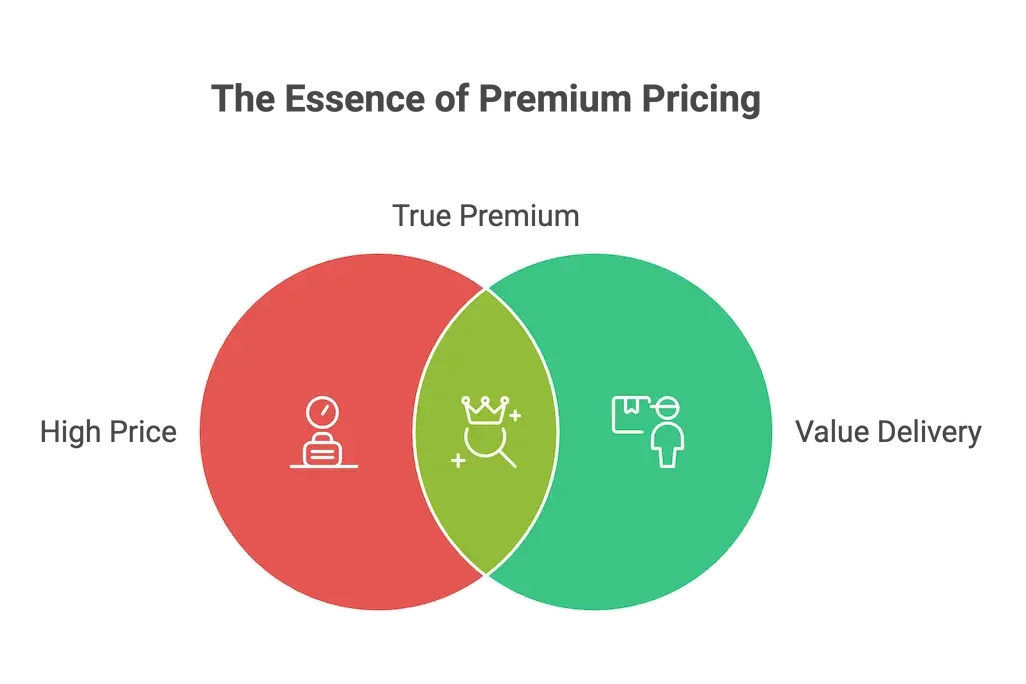
Companies that master this don’t just earn more per sale. They also build sustainable businesses, attract better customers, and create unique advantages. These advantages can’t be copied by simply lowering prices.
Your customers are already paying premium prices for something. The question is: Are they paying them to you or to your competitors?
Ready to stop apologizing for your prices? Celebrate your margins instead! Dive into the science of premium pricing strategy. Explore our Premium Pricing Strategy Guide. It’s your guide to changing pricing from a profit killer to a profit multiplier.
Ready to turn your consumer goods company into a premium pricing powerhouse? Get the Premium Pricing Strategy Guide. Learn how visionary CEOs double their prices while keeping customers. In a market of cheap choices, premium positioning isn’t just an edge—it’s crucial for survival.
Want more insights on building premium pricing power in your industry? Our Premium Pricing Strategy Guide looks at psychological triggers. It also shows you how to use these strategies well. It includes real-world case studies and proven frameworks for all business models.
Ready to Stop Being the “Cheap Option”?
The P.R.O.F.I.T. Premium Framework™ has helped consumer goods CEOs transform their companies from price-takers to price-makers.
Your competitors are still racing to the bottom. While they’re cutting margins, you’ll be commanding premiums.
Get the complete Premium Pricing Strategy Guide and discover how to implement the P.R.O.F.I.T. Premium Framework™ in your company. It’s your blueprint for escaping the price war and claiming premium positioning.
Because being cheap is expensive, being premium is profitable.