The Deadly Seduction of Cost-Plus Pricing Strategies
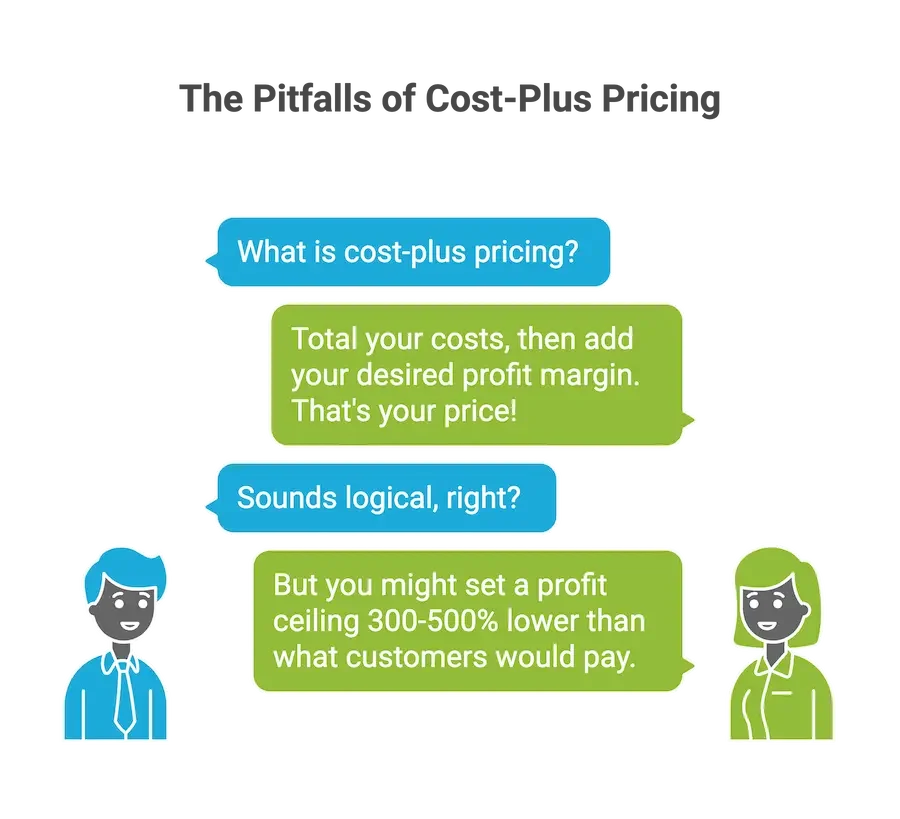
Here’s what business schools and advisors say about cost-plus pricing: “Total your costs, then add your desired profit margin. That’s your price!”
Sounds logical, right? If your production cost is $50, add a 100% markup to charge $100. Simple math. Safe margins. No guesswork.
But here’s the catch: You might set a profit ceiling 300-500% lower than what customers would pay.
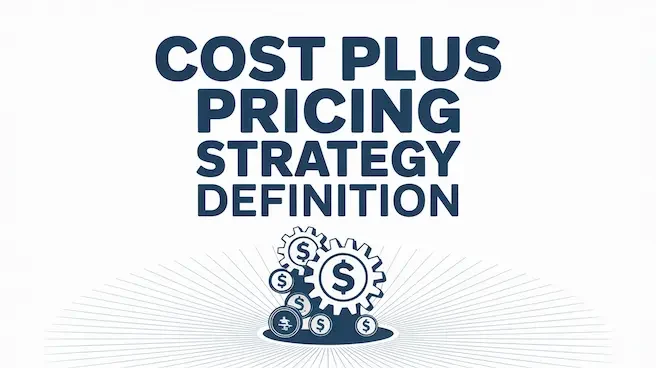
Cost Plus Pricing Strategy Definition (The Business School Version)
According to traditional business education, cost-plus pricing involves:
A pricing method adds a fixed percentage to total production costs to set the selling price. The formula is: Selling Price = Total Cost + (Total Cost × Markup Percentage).
The Business Context: This method is used by many manufacturing companies, government contractors, and retailers. It guarantees cost recovery and predictable profit margins.
The Economics Angle: Cost-plus pricing helps firms cover costs and earn a fixed return on investment.
Sounds reasonable. Sounds safe. But it is damaging your profit potential.
The Three Fatal Flaws of Cost-Plus Pricing
Fatal Flaw #1: It ignores customer value.
When you set prices based on costs, you convey, “My expenses and profit matter more than what this is worth to you.”
A software company invests $100,000 to create a tool that helps corporations save $1 million annually. Using cost-plus pricing with a 200% markup, they would charge $300,000. Customers would gladly pay $500,000 for those savings.
Result? They left $200,000 per customer on the table by focusing on costs instead of value.
Fatal Flaw #2: It Creates a Race to the Bottom
When everyone uses cost-plus pricing, competition shifts to cutting costs. This results in a spiral in which the winner is the cheapest.
Real Example: The airline industry’s focus on cost led to the “cattle car” experience. Instead of competing on value, they competed on cost-cutting.
Meanwhile, companies like Emirates and Singapore Airlines thrive by focusing on customer value.
Fatal Flaw #3: It Caps Your Growth Potential
Cost-plus pricing limits growth. Profits can only grow with volume, which requires proportional cost increases.
The Math: If your costs are $50 and you mark up 100% to charge $100, your profit per unit is $50. To double profits, you must double volume and likely double costs.
Compare this to value pricing: If customers pay $200 for that item, your profit per unit is $150. That’s three times higher than at the same volume.
When Cost-Plus Pricing Actually Makes Sense
I’m not against cost-plus pricing. It works in certain situations:
Government Contracting: Bidding on contracts where the government pays for costs and adds a fixed fee.
Custom Manufacturing: Making unique products where value is hard to gauge and costs vary.
Commodity businesses: Selling actual commodities where differentiation is minimal, and cost leadership matters.
Early Stage Pricing: Launching new products where you don’t know what customers will pay.
But remember: even here, cost-plus should be a starting point, not the finish line.

The Smart Alternative: Value-Informed Cost-Plus
Instead of pure cost-plus pricing, try this hybrid approach:
Step 1: Calculate your cost plus price as a minimum. Step 2: Research what customers would pay based on value. Step 3: Set your price within that range based on your goals.
Example:
- Cost plus floor: $100.
- Customer value ceiling: $300.
- Strategic price: $250 (captures most value while staying competitive)
This method uses cost-plus as a safety net while maximizing market value.
How to Escape the Cost-Plus Trap
Escape Strategy #1: Identify Your Value Drivers
What outcomes does your product deliver? Time savings? Revenue boosts? Price based on these outcomes, not on your costs.
Escape Strategy #2: Segment Your Market
Different customer segments value things differently. A startup may pay $99 a month for software, while an enterprise pays $10,000 a month for the same software. The costs are the same, but the value is seen differently.
Escape Strategy #3: Bundle and Package Strategically
Instead of pricing components separately, create packages that maximize perceived value. McDonald’s sells value meals, not individual items.
Escape Strategy #4: Test Price Sensitivity
Gradually test higher prices with new customers. You might find that a 20% price increase only reduces demand by 5%, significantly boosting profits.
The Competitive Advantage of Escaping Cost-Plus
Moving away from cost-plus pricing while competitors stay with it gives you big advantages.
Higher Profit Margins: Keep more of the value you create instead of giving it all to customers.
Innovation Investment: Higher margins fund better products and customer experiences.
Market Positioning: Position yourself as a premium leader or a value leader. Don’t just compete on price.
Customer Relationships: Attract customers who value what you do, not just those seeking the lowest prices.
The Bottom Line on Cost-Plus Pricing Strategy
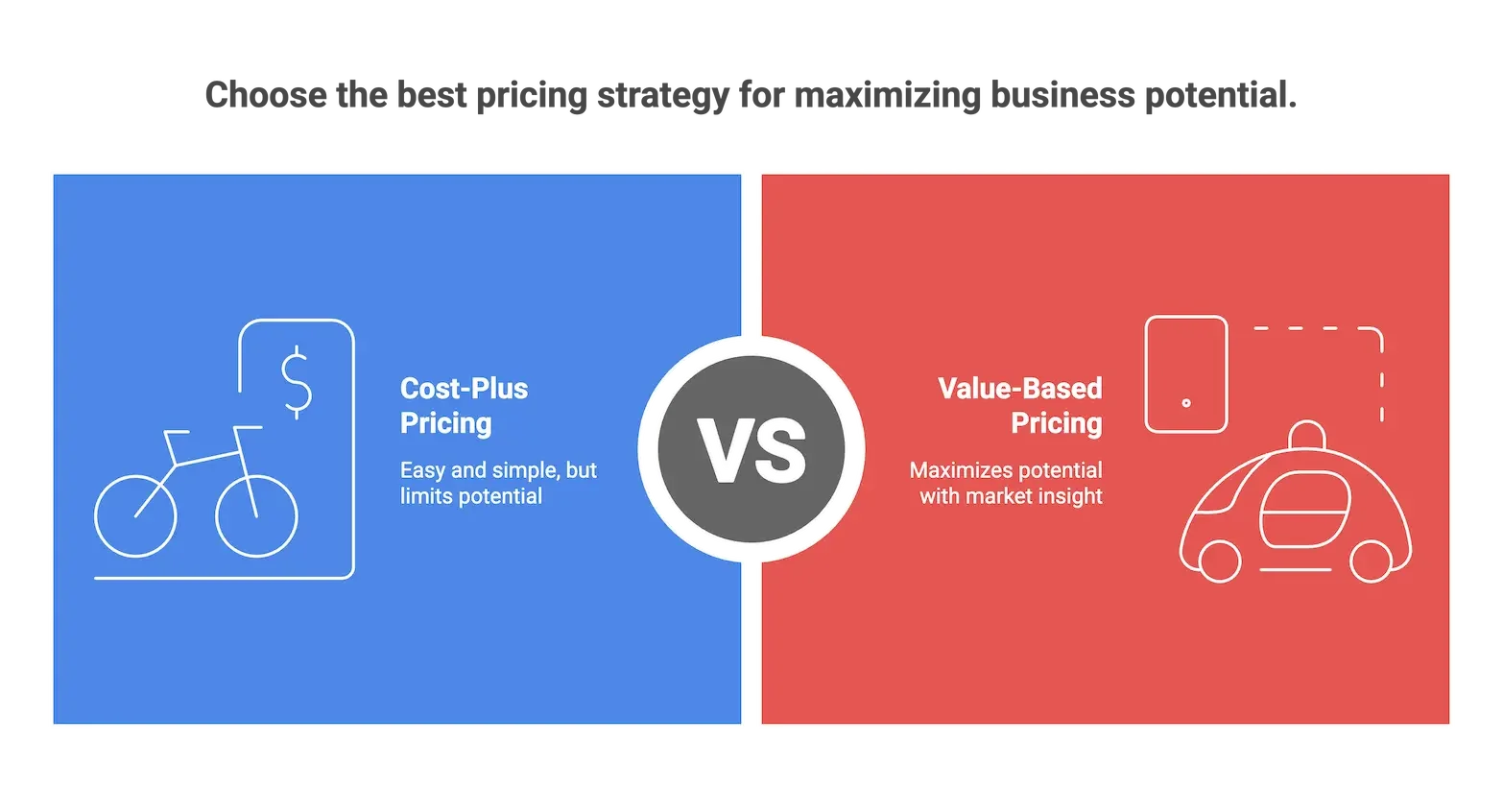
Cost-plus pricing isn’t evil; it’s just minimal. It’s like using a bicycle when you could drive a Ferrari. Both get you there, but one is faster and more stylish.
The Truth: Cost-plus pricing is often chosen for ease, not effectiveness. It requires no market research, customer insight, or strategic thinking.
However, being easy and profitable are rarely the same in business.
To maximize your potential, use cost plus as your foundation, not your ceiling. Know your costs, then price based on value. Your accountant might need convincing, but your bank account will thank you.
For a complete overview of pricing strategies, see our guide: The Ultimate Pricing Strategy Definition Guide.
Remember: Your costs determine survival. Customer value determines success. Choose wisely.