
The Science Behind “I Must Have It NOW”
Before we explore the tactics that make customers eager to pay more, let’s look at why scarcity works.
Behavioral economists have studied this for years. Research from Arizona State University shows that scarcity triggers “loss aversion.” People hate losing out and panic when they think an item might vanish.
Think about it. When did you last see a “Going Out of Business” sale without a crowd? It doesn’t happen. Scarcity drives action.

Three Types of Scarcity That Make Cash Registers Sing
Time Scarcity: The Ticking Clock of Profit
“Limited time offer” isn’t just fluff; it’s a game-changer. Deadlines push customers to make quicker choices.
The best part? Time scarcity works even if it’s artificial. McDonald’s brings back the McRib “for a limited time,” and people still get excited. Why? Scarcity creates value.
Quantity Scarcity: The “Only X Remaining” Magic
Nothing gets customers reaching for their wallets faster than “Only three spots remaining.” Selling consulting packages or handmade crafts? Quantity limits create a fear of missing out.
I learned this early in my career. I sold a premium training program with unlimited spots. Sales were slow. Then I capped it at 20 participants. Suddenly, I had a waiting list.
The only thing that changed was perception. Scarcity created value.
Exclusive Access Scarcity: The VIP Treatment
This is where premium pricing gets fun. When you make your top-tier option exclusive, you sell membership in a special club.
Look at American Express Black Cards. They don’t advertise. You can’t apply online; you get invited. People pay high fees for this privilege: exclusive access to scarcity.
The Psychology Behind Premium Scarcity
Research in the Journal of Consumer Research shows that scarcity affects buying decisions. When something is scarce, we focus less on need and more on how to get it.
This is why auction houses thrive. Take two identical paintings—one at a garage sale, one at a Sotheby’s auction labeled “rare.” Same painting, different prices. The key? Perceived scarcity.
Scarcity Tactics That Actually Work (Without Being Sleazy)
The Consultation Cap
Instead of taking unlimited clients, limit your consultations. “I only take on three new clients each month” feels more exclusive than saying you’re always available.
The Seasonal Launch
Release your premium offerings at specific times. Software companies do this well—think of Apple. They create events and build excitement with each launch.
The Membership Model
Offer different access tiers. Basic customers receive one level of service. Premium customers get a different level. Ultra-premium customers enjoy exclusive benefits. It’s not just about pricing; it’s about true exclusivity.
The Dark Side of Scarcity (and How to Avoid It)
Before we begin countdowns, let’s explore how absolute scarcity differs from manipulation.
Fake scarcity can backfire. If customers sense deception, they’ll be furious. Authentic scarcity is key. If you genuinely can only handle 10 premium clients, be honest. If you want to test a new service with a small group, that’s absolute scarcity.
Scarcity in Different Industries: What Works Where
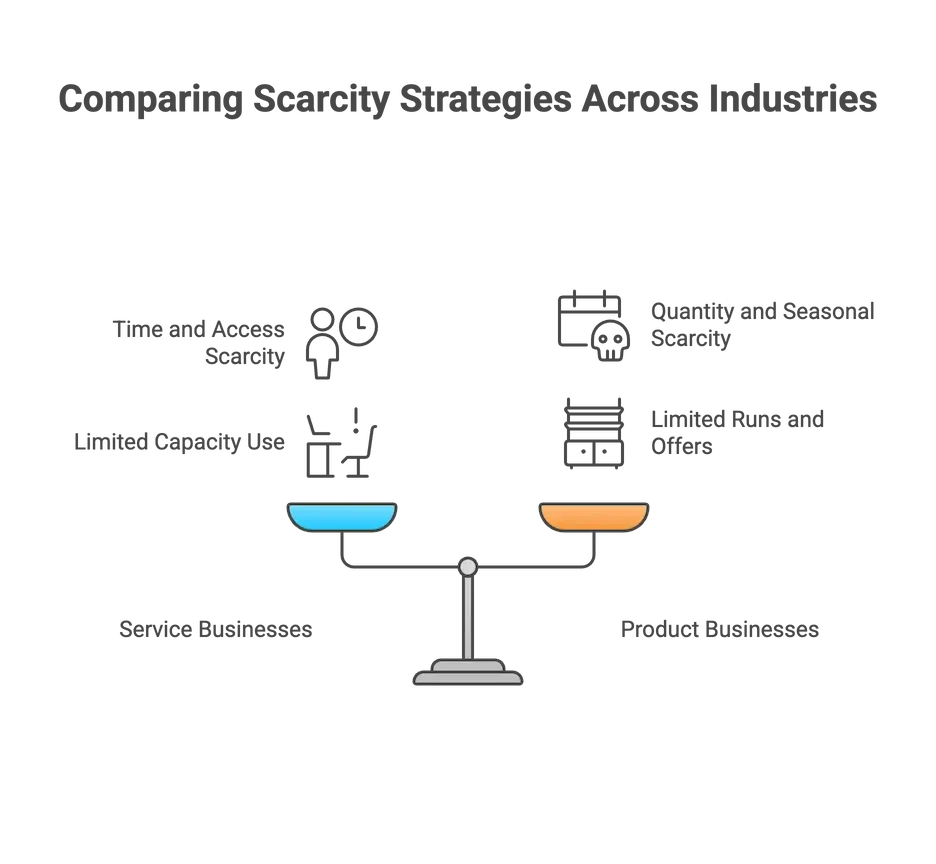
For service businesses, time and access scarcity work best. Consultants and agencies have limited capacity; use that.
For products, quantity and seasonal scarcity shine. Limited runs, special editions, and time-limited offers are effective.
It’s trickier for digital products and SaaS. However, you can create scarcity through feature limits, beta access, or temporary pricing.
Implementing Scarcity Without Losing Your Soul
Scarcity in premium pricing works best when it’s real. Genuine limitations in your business create actual value.
Maybe you can only handle five premium clients due to the attention you provide. Or your handcrafted product takes six weeks to make. When you communicate these realities, customers appreciate the exclusivity.
The Bottom Line on Scarcity and Premium Pricing
Scarcity isn’t just a tactic; it’s a part of human psychology. When you realize people value what’s rare, you can shape your business around it.
But remember, use scarcity to highlight genuine value, not to trick customers.
Want to explore effective premium pricing strategies? Check out my comprehensive premium pricing strategy guide for more insights on earning premium prices without guilt.
Once you use scarcity well, you’ll wonder how you got by without it. Your customers will love how easy it is to choose, and your bank account will be happy, too.
Now, if you’ll excuse me, I need to limit something. This advice is getting dangerously too available.

Ready to command the premium prices your expertise deserves? Grab my complete premium pricing playbook and discover a step-by-step system that turns price-sensitive prospects into premium-paying clients.