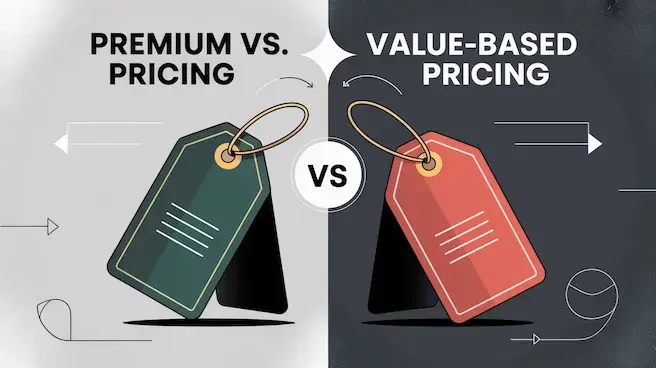
What’s the real difference? (Spoiler: it’s not what you think)
Premium pricing is like being the Rolex of your field. You charge more because you are considered the best, most exclusive, or most prestigious option. Your price signals quality, status, and superiority.
Value-based pricing is like a consultant who saves a client $2 million. The consultant then charges $200,000 for that service. Your pricing is based on the specific value you deliver to each customer.
Many “experts” miss the mark here. They treat these strategies as if they can’t work together. That’s like saying you can’t be both smart AND good-looking. (Okay, that’s a bad example; most of us must pick one.)
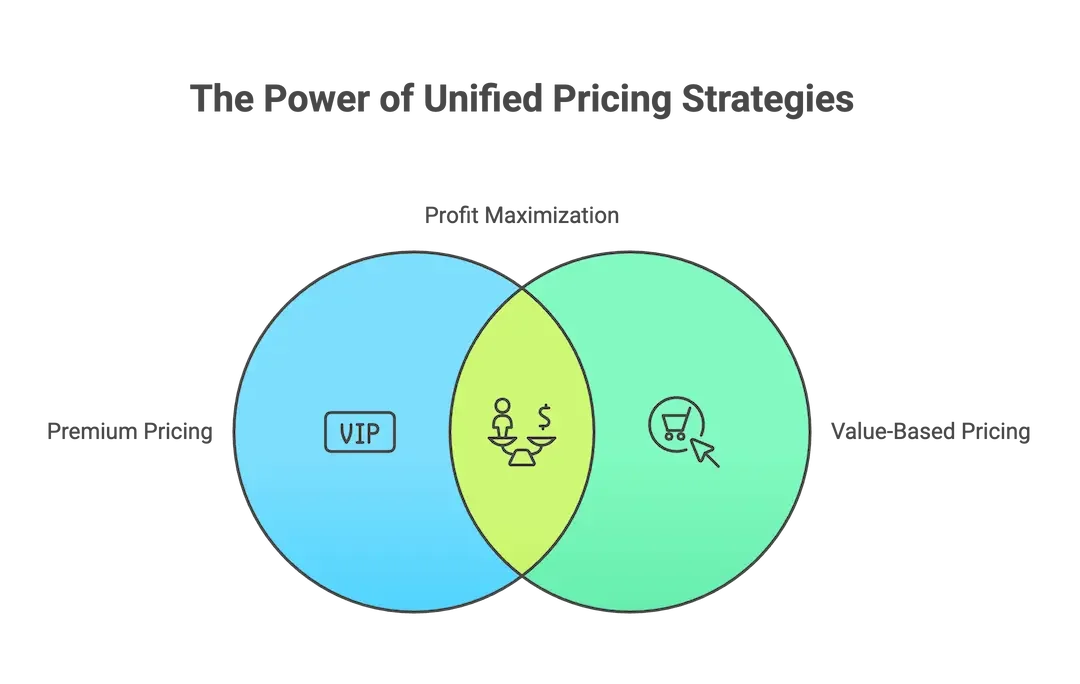
The reality? Premium pricing focuses on a brand’s position in the market. In contrast, value-based pricing centers on relationships with individual customers. You can be the premium option in your market, and the price is based on customer value.
MIT Sloan’s research shows that companies with premium and value-based pricing earn 23% more profit margins. This is better than companies that stick to just one pricing strategy.

When Premium Pricing Makes Your Competition Weep
Premium pricing works when you’ve got something your competitors can’t easily copy. Think Apple, Tesla, or that restaurant where you need a reservation six months in advance.
You should go premium when:
- Your brand reputation precedes you (in a good way).
- Customers see you as the clear quality leader.
- Price isn’t the primary deciding factor in your market.
- You’ve got exclusivity, scarcity, or genuine differentiation.
Premium pricing is psychology at work. When someone spends $300 on a bottle of wine, they’re not just getting fermented grape juice. They’re also buying the story, the status, and the experience. Your job is to create that same psychological value in your selling.
When Value-Based Pricing Makes Your Bank Account Sing
Value-based pricing works best when you can show and measure the results you provide. It’s great for consultants, software companies, and any business with different customer outcomes.
You should price based on value when:
- You can measure and communicate specific customer results.
- Different customers receive vastly different levels of value from your work.
- ROI is a key decision-making factor for your buyers.
- You’re solving expensive problems or creating significant opportunities.
Here’s the beautiful thing about value-based pricing: there’s no ceiling. If you save a company $5 million, charging $500,000 suddenly seems reasonable. If your software increases their revenue by $1 million annually, a $100,000 price tag is a bargain.
The Boston Consulting Group showed that firms using value-based pricing can boost profits by 8% to 25% in their first year.
The Secret Sauce: Using Both Like a Pricing Ninja
Here’s where it gets interesting. The most innovative companies mix these strategies like a bartender layers a cocktail.
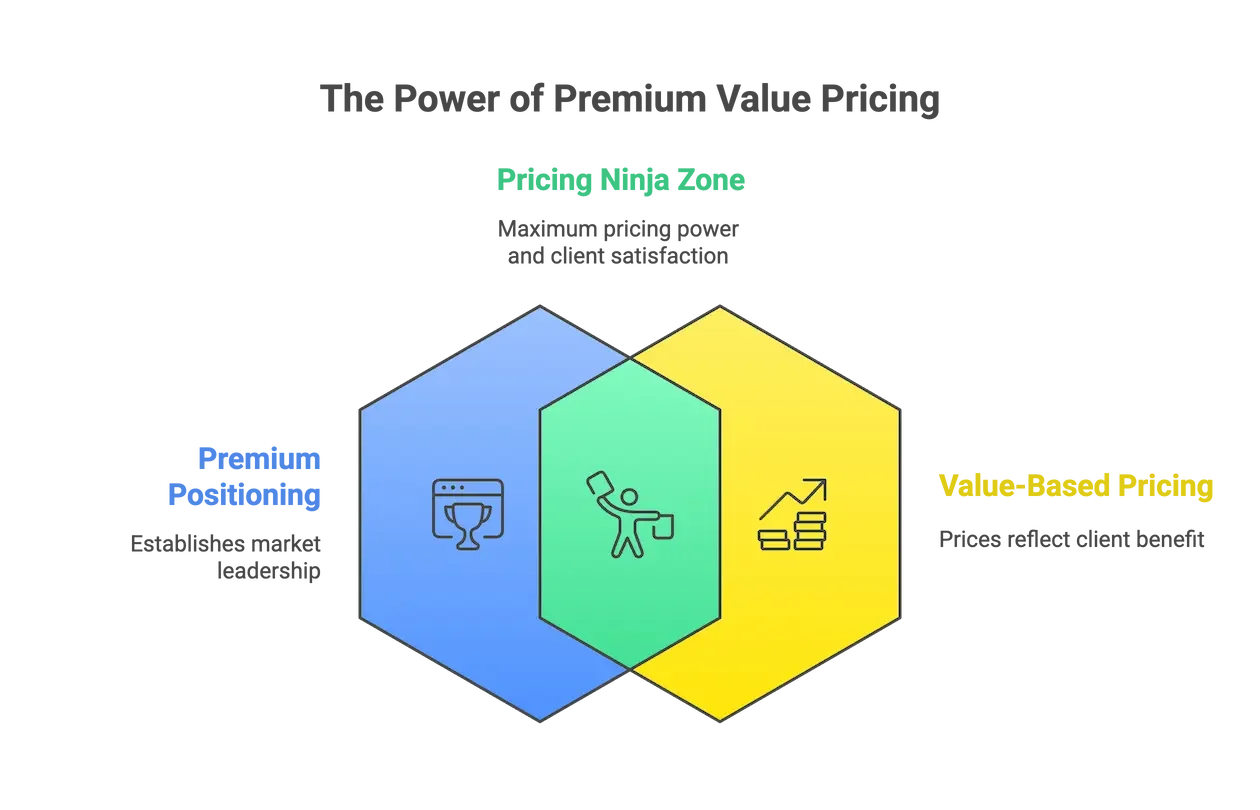
Start with premium positioning. Establish yourself as the quality leader in your market. Build the brand, create the reputation, and develop the prestige. This will give you pricing power and attract better customers.
Then, apply value-based pricing within that premium position. Once you’re the top choice, you can set prices for each engagement. These should reflect the value you offer clients.
For example, imagine you are a marketing consultant. You stand out as the top choice in your market. Your premium positioning gets you in the door and justifies higher base rates. You can price a $10 million product by focusing on the high value of a successful launch.
Real-World Examples That Will Make You Rethink Everything
McKinsey & Company is the perfect example. It is seen as the top consulting firm with a premium pricing strategy. However, it charges clients based on the value of each engagement.
Salesforce does this brilliantly, too. It’s the top CRM choice, but pricing varies based on how much value customers get from it.
BMW blends two strategies: It showcases a premium brand image and provides value-based options for different customer groups and their needs.
The Implementation Roadmap (Because Strategy Without Action Is Just Expensive Daydreaming)
Phase 1: Build Your Premium Foundation. Start by establishing your premium market position. This isn’t just about raising prices quickly. It’s about building a strong reputation and solid credentials. This creates a positive brand image that supports premium pricing.
Phase 2: Develop Value Measurement Systems. Track, measure, and share the value you provide to customers. If you can’t measure it, you can’t price based on it.
Phase 3: Layer the Strategies. Leverage your premium position to support higher base rates. Then, use value-based pricing for specific projects or customer groups.
Phase 4: Test and Optimize. Like any good strategy, this requires constant refinement. Test different approaches, measure results, and optimize based on your learning.
Want a complete blueprint for implementing both strategies? Our Premium Pricing Strategy Playbook shows you how to be the top choice and helps you seize value-based pricing opportunities.
The Bottom Line (Because Your Bottom Line Matters)
Stop treating premium and value-based pricing like opposing political parties. They’re not enemies – they’re partners in profit.
The companies making the most money aren’t choosing between these strategies. They combine them strategically to maximize market positioning and individual customer value.
Premium positioning gets you in the game. Value-based pricing helps you win it.
Are you ready to stop wasting money? It’s time to use both strategies like the profit-maximizing ninja you were meant to be!
Get the complete Premium Pricing Strategy Playbook. Discover how to apply premium and value-based pricing in your business. This way, you won’t confuse your customers or hurt your sales.
Choosing the wrong pricing strategy is bad. But leaving potential profits on the table is worse.