The B2B Buyer’s Nightmare: Looking Cheap to the Boss
Picture this: You’re a procurement manager at a Fortune 500 company. Your CEO has asked you to discover the best cybersecurity solution for the company’s key assets. Do you really want to walk into the boardroom and announce you chose the cheapest option?
It’s like showing up to a black-tie event in a tuxedo from the clearance rack at Walmart. It covers the key points, but people will notice something is wrong.
Bain & Company found that 73% of B2B decision-makers see higher prices as a sign of better quality. This is especially true for mission-critical services. They’re not just buying your product – they’re buying career insurance.
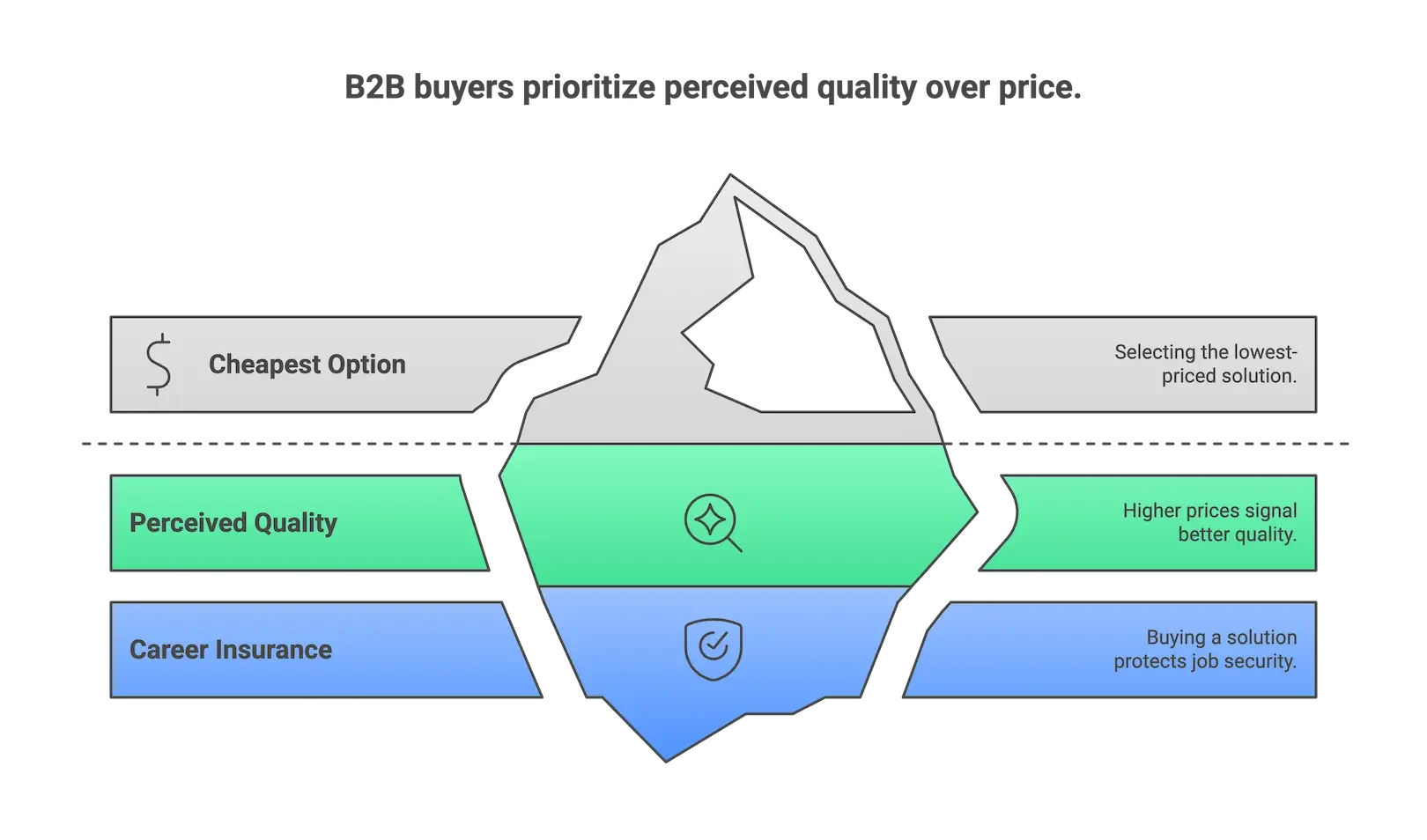
Why B2B buyers’ brains are wired for premium.
B2B purchasing isn’t emotional like consumer buying. It’s more emotional because careers are on the line.
When B2B buyers pick your premium solution, they aren’t just fixing a problem. They also show their organization that they are making wise, strategic choices. They’re the person who “gets” that sometimes you have to spend money to make money.
But when they choose the bargain-basement option? Well, resumes get updated quickly when things go sideways.
This is why premium pricing in B2B markets works so beautifully. You’re not selling a product; you’re selling professional credibility. You’re selling the ability to sleep at night knowing you’ve made the “safe” choice.
The Three Pillars of B2B Premium Pricing
Pillar 1: Risk Mitigation Beats Cost Savings
In B2B, the cost of being wrong is often catastrophic. A bad hiring decision costs 3x the person’s salary. A security breach costs millions, plus regulatory nightmares. A failed software implementation can torpedo entire quarters.
Smart B2B buyers understand that paying higher prices can be wise due to the risks involved. They’re not paying for your product – they’re paying for your insurance policy.
A Harvard Business Review study found that 84% of B2B buyers prefer vendor reliability and risk management to price. This is especially true for strategic purchases.
Pillar 2: Expertise Commands Premium
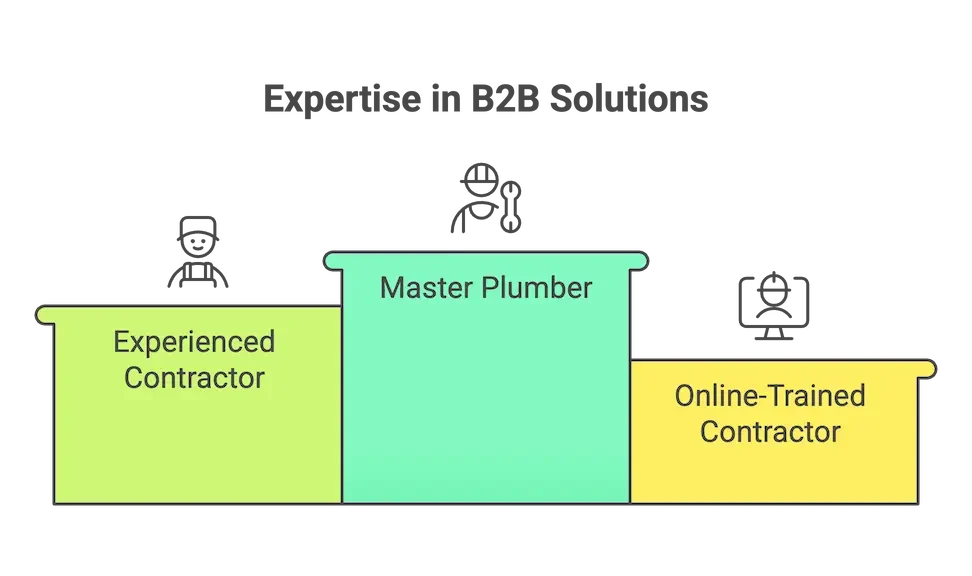
B2B buyers aren’t just purchasing products. They’re looking for solutions to complex issues they can’t tackle alone. Positioning yourself as an expert helps justify premium pricing. You’ve “been there, done that,” so customers see your value.
Would you choose a $50/hour contractor who learned plumbing online? Or a $150/hour master plumber with experience fixing the same issue in buildings like yours? Your pipes (and your career) depend on making the wise choice.
Pillar 3: Relationships Drive Repeat Revenue
B2B is fascinating. Unlike consumer buying, B2B relationships last longer. Your buyers aren’t just purchasing once – they’re essentially picking a business partner.
Premium pricing actually strengthens these relationships because it allows you to:
- Provide white-glove service.
- Invest in account management.
- Offer strategic consultation beyond the basic products.
- Be available when they need you the most.
When you set premium prices, you can treat clients like VIPs, not just numbers. VIP treatment creates loyal customers who refer other VIP-level clients.
The B2B Premium Pricing Playbook
Step 1: Position Yourself as the “Safe Choice”
Stop selling features and start selling peace of mind. Your marketing should answer the question: “What happens if this goes wrong?” Then position your premium solution as the insurance policy against that nightmare scenario.
Step 2: Lead with ROI, Not Price
B2B buyers consider return on investment, not sticker price. A $100,000 solution that creates $500,000 in value is excellent. In contrast, a $10,000 solution that only brings in $15,000 feels costly.
Frame your premium pricing around the value delivered, not the cost incurred. Show them the math.
Step 3: Create Exclusive Access
Nothing says “premium” like exclusivity. Limit your client list and applications, and ensure people qualify to work with you.
When prospects “earn” the right to pay your premium prices, it feels like a privilege, not a penalty.
Common B2B Premium Pricing Mistakes (and How to Avoid Them)
Mistake 1: Competing on Price. The moment you start justifying your prices, you’ve lost. Premium providers don’t compete on price – they compete on value, expertise, and results.
Mistake 2: Apologizing for Your Rates. Confidence is contagious, but so is insecurity. If you don’t believe your premium prices are justified, why should your prospects?
Mistake 3: Accepting Every Client. Scarcity creates value. When you take on anyone with a pulse and a purchase order, you’re not premium – you’re desperate.
The Premium Pricing Mindset Shift
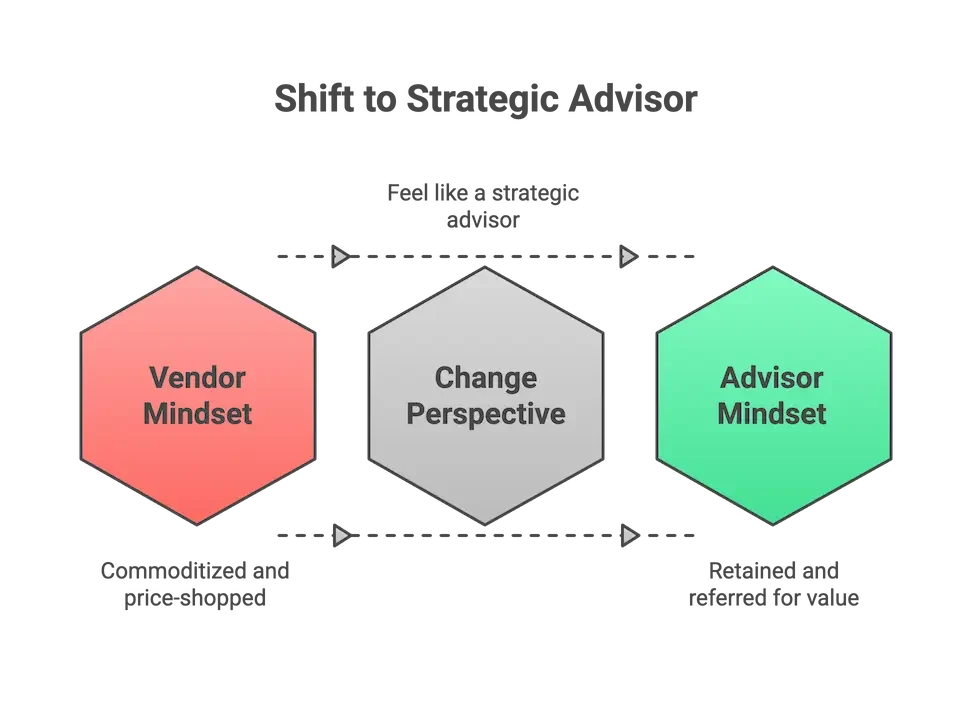
Here’s the key change: Stop thinking like a vendor. Instead, feel like a strategic advisor.
Vendors get commoditized and price-shopped. Strategic advisors get retained and referred.
Vendors solve immediate problems. Strategic advisors prevent future disasters.
Vendors are expenses to be minimized. Strategic advisors are investments to be maximized.
Changing your perspective makes premium pricing seem less like stealing. Instead, it feels like it’s just how things should be.
Your Next Move
Are you ready to stop saying sorry for your prices? It’s time to charge what you deserve! The B2B market is prepared for someone bold enough to demand its actual value.
But here’s the thing – premium pricing isn’t just about raising your rates and hoping for the best. A straightforward method helps you charge premium prices and deliver premium value.
Look at our Premium Pricing Strategy Guide to use premium pricing in your business. Premium providers are different from commodity sellers. They offer unique frameworks, scripts, and mindset shifts.
At the end of the day, your B2B clients expect to pay premium prices for premium results. The only question is: will they pay you or your competitors for them?
Ready to claim your position as the premium choice in your market? Get the complete Premium Pricing Strategy Guide and start charging what your expertise is worth.