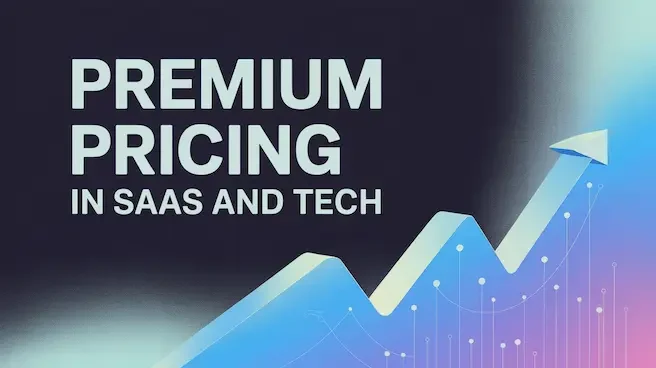
Welcome to the strange world of SaaS pricing. Here, charging more often leads to better results. Many tech founders are too busy apologizing for their prices to see that they are soaring.
Why SaaS premium pricing makes sense.
The Psychology of Software Value
Did you know? ProfitWell research shows that customers paying more for SaaS products churn 30% less and enjoy a 40% higher lifetime value.
Read that again.
Your customers want to pay more, so you’re worried about raising prices from $9 to $12.
Here’s what is going on in your customers’ minds when they see your pricing:
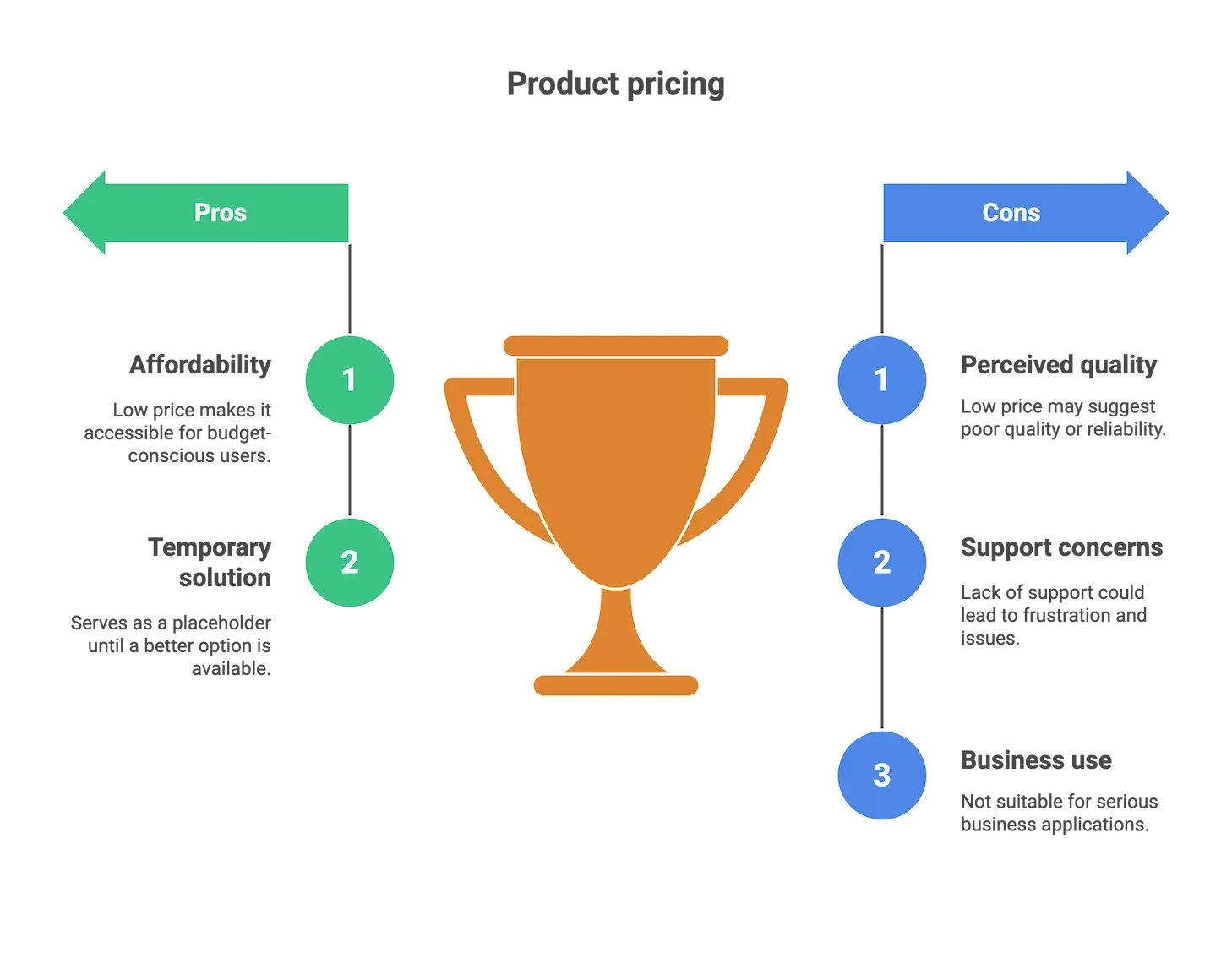
Low Price Signal: “This is probably buggy and unsupported. I’ll use it until something better comes along.”
Premium Price Signal: “This must be good. Important businesses use this. I should take it seriously.”
The Feature Fallacy Hurting Your Revenue
Many SaaS founders believe pricing is just about features. They think more features mean a higher price. Simple math, right?
Wrong. Premium SaaS pricing isn’t about features; it’s about delivering value. A McKinsey study found that successful SaaS companies use value-based pricing. This approach can boost profit margins by 15-25%.
Companies charging 10x more aren’t doing 10x more things. They’re solving 10x more critical problems.
The SaaS Premium Pricing Playbook
Strategy #1: The Enterprise Graduation Model
Begin with small businesses at lower prices. Then, add an “enterprise” tier that costs 5 to 10 times more for the same features.
“But David,” you might ask, “isn’t that just ripping off enterprise customers?”
Not if done right. Enterprise customers want:
- Dedicated support (even if unused)
- Security compliance you needed, anyway.
- Confidence from paying serious money.
- A vendor that won’t disappear
Strategy #2: The Capacity Constraint Lever
This is where SaaS pricing gets clever. Instead of unlimited everything, create artificial scarcity:
- Users per account.
- Projects per workspace.
- API calls per month.
- Storage limits that matter.
Slack doesn’t limit messages for technical reasons. It limits message history to create upgrade pressure, which is smart.
Strategy #3: Positioning for Professionals
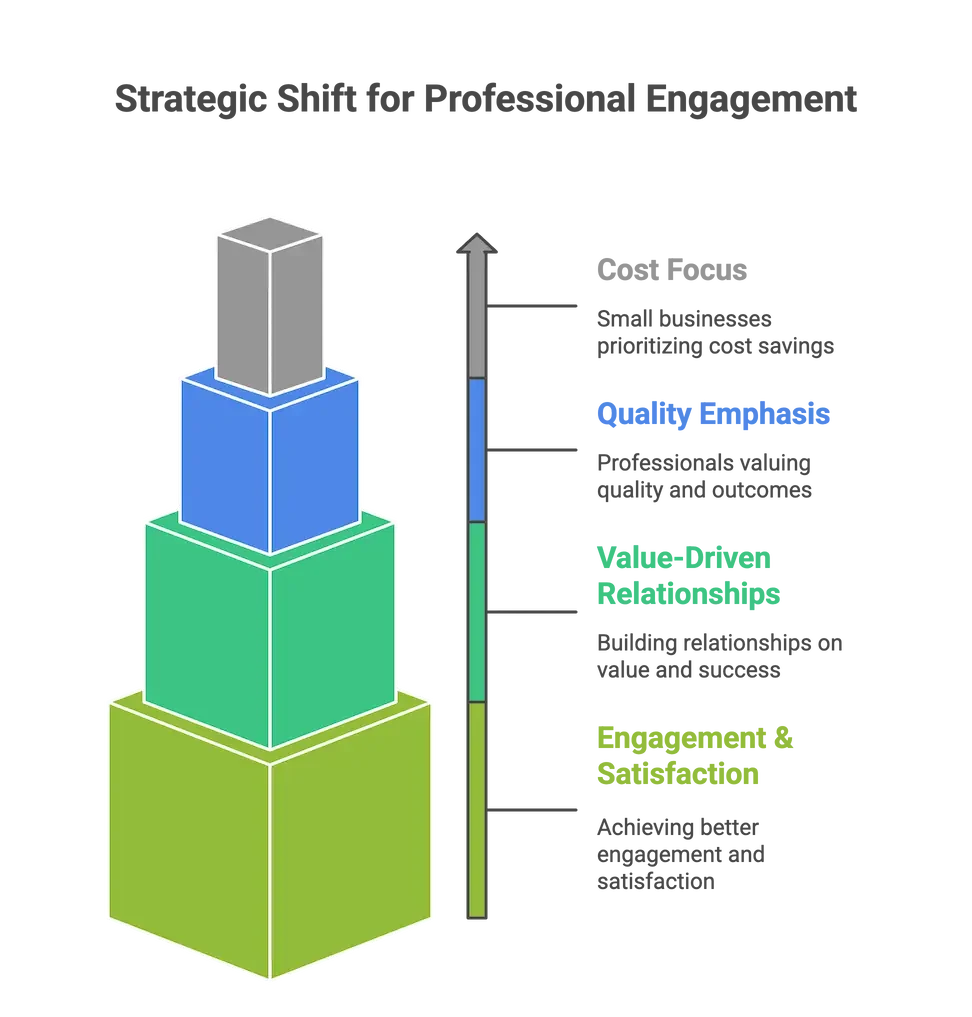
Stop targeting “small businesses trying to save money.” Instead, focus on “professionals who invest in results.”
Professional designers avoid free tools. Developers skip free hosting. Serious businesses steer clear of free CRM systems.
Position your premium tier as the tool for serious professionals.
The Technical Implementation
Multi-Tier Architecture That Works
Many SaaS companies set up pricing tiers like a sandwich menu: Basic, Premium, and Enterprise. They add features and hope for the best.
Smart SaaS companies build tiers around customer success milestones:
Starter Tier: For testing and proof of concept.
Growth Tier: For scaling and collaboration.
Enterprise Tier: For mission-critical operations.
Each tier focuses on the stage of business success that your customer aims for.
The Freemium Trap
Free plans quickly teach customers that your software isn’t worth paying for. If you must have a free tier, make it so limited that it feels like a demo.
Give just enough to show value, but not enough to stay long-term.
Usage-Based Pricing: The Hidden Goldmine
Many SaaS companies miss out by charging per user instead of per outcome.
Innovative pricing models scale with customers’ success.
- Charge per transaction processed
- Charge per revenue generated
- Charge per customer acquired
- Charge per project completed
When pricing grows with its success, objections vanish. You become an investment, not an expense.
Psychology Tricks That Make Premium Prices Feel Like Bargains
The Anchor Effect in SaaS Pricing
Always show your most expensive plan first. Seeing a $500/month enterprise plan makes your $99/month professional plan look like a good deal.
Many SaaS companies hide enterprise pricing behind “Contact Sales.” This is a big mistake. Show a significant number up front, and everything else feels like a bargain.
The “Cost of Not Having This” Calculator
Build ROI calculators that show the cost of not using your software.
- Hours are wasted on manual processes.
- Opportunities are missed due to poor data.
- Revenue is lost from inefficient workflows.
The decision becomes clear when customers lose $5,000 a month by not paying the monthly price.
Industry-Specific SaaS Pricing Strategies
B2B SaaS: Where Premium Pricing Thrives
B2B buyers expect to pay serious money for serious tools. If your software costs less than their monthly coffee budget, you’re priced too low.
B2B customers are not price shoppers; they’re risk shoppers. They want the solution that will work, get support, and not disappear.
Consumer SaaS: The Subscription Psychology Game
Consumer SaaS is trickier because individuals feel price pain more acutely. However, you can still command premium prices by:
- Focusing on aspirational outcomes (“Be the designer you want to be.”)
- Creating status through pricing (“Join the Creative Professional Tier”).
- Building habit-forming products that become essential.
Vertical SaaS: The Premium Pricing Sweet Spot
Industry-specific software shines in premium pricing. You can charge more when you’re the only option for orthodontists or construction companies.
Vertical SaaS companies typically charge 3-5 times more than general solutions. They do this because they know specific pain points.
Testing and Optimizing Your SaaS Pricing Model
The Price Testing Paradox
Many SaaS companies fear testing higher prices because they might lose customers.
But if a 25% price increase loses you 10% of customers, you just raised revenue by 12.5%. You now have 10% fewer support tickets and a more committed customer base.
Grandfathering vs. Forced Upgrades
When you raise prices (and you should), you have two choices:
- Grandfather existing customers at old prices.
- Force everyone to adopt new pricing.
Grandfathering feels nice, but it creates a two-class system. Notice these forced upgrades, and most customers will stay. This is true, especially if you have built real value.
The Annual vs. Monthly Premium Game
Always provide annual pricing at a discount. Make monthly pricing feel high so that annual pricing looks great. Most successful SaaS companies get 70-80% of revenue from yearly plans.
Common SaaS pricing mistakes that kill revenue.
Mistake #1: Competing on Price Instead of Value
If your main selling point is being cheaper, you’re racing to the bottom. Someone will always charge less or give it away for free.
Instead, compete on outcomes. Be the solution that delivers the best results, fastest implementation, or highest uptime.
Mistake #2: Undervaluing Your Innovation
You have built something amazing over the years, yet you price it like a commodity. You worry customers won’t pay.
Your innovation has value. Price it accordingly.
Mistake #3: Creating Too Many Pricing Tiers
More options don’t increase sales—they increase confusion. Stick to 3-4 tiers maximum. More options make it harder for customers to buy.
The Future of Premium SaaS Pricing
AI and Value-Based Pricing
Artificial intelligence is making it easier to demonstrate tangible business value. Smart SaaS companies will use AI to show how much time, money, and hassle they save for their customers.
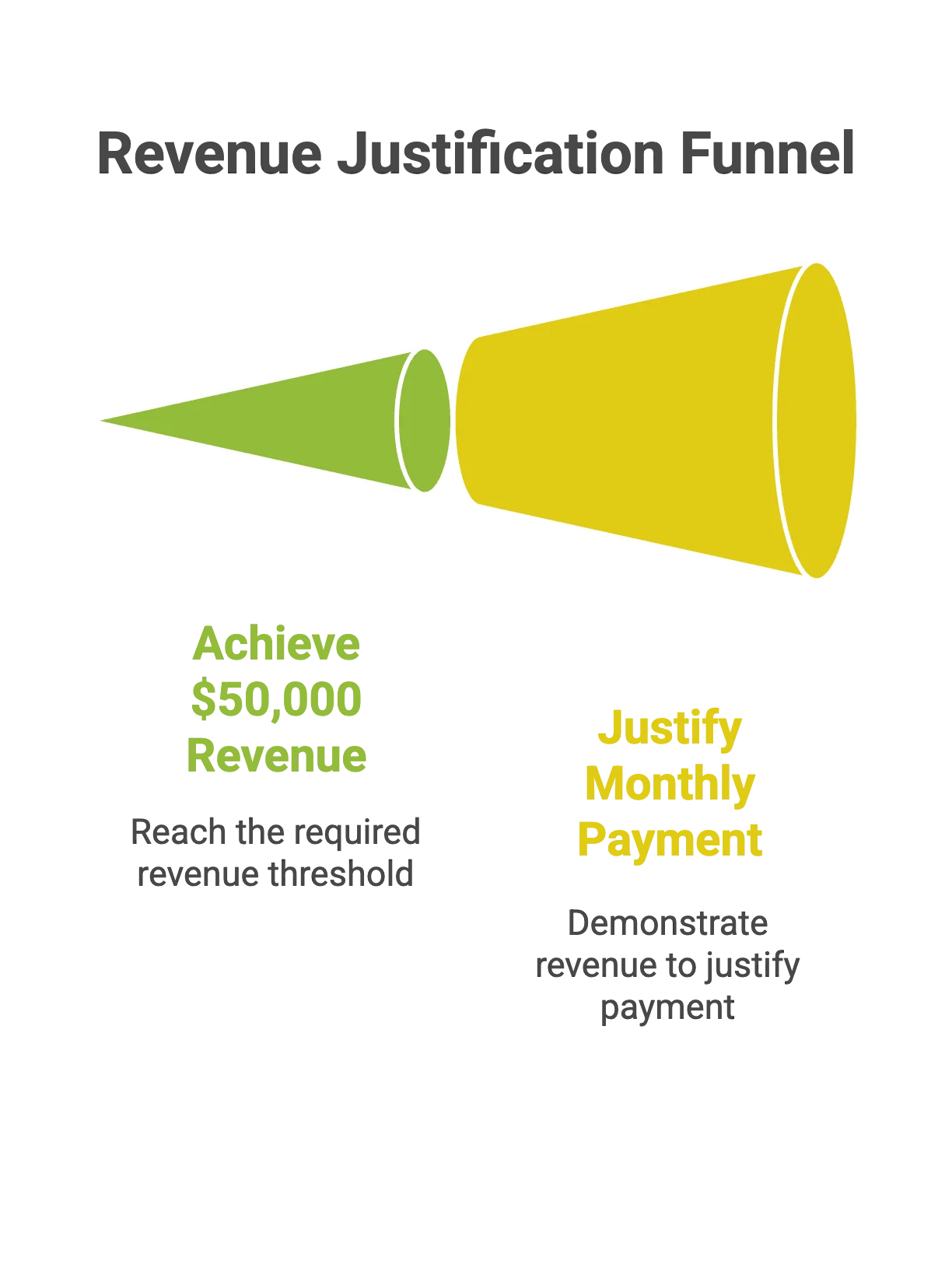
If you show you made $50,000 more in revenue, paying $500 monthly is easy to justify.
API-First Pricing Models
As software links more, pricing will focus on the value of the whole tech stack instead of just single tools.
SaaS companies that set prices based on ecosystem value will lead the premium market.
Ready to stop apologizing for your prices?
Look, I get it. Raising prices feels scary. You have customers who appreciate your pricing. Investors are pushing for changes, and competition is close behind.
Here’s the deal: you miss out on money daily when you undercharge. That money could provide better features, quicker support, and stronger security. Your customers want you to succeed. Your success means their solution keeps working.
Premium pricing isn’t about gouging customers. It’s about building a sustainable business that can invest in long-term customer success.
Want the complete roadmap for implementing premium pricing in your business? Explore our Premium Pricing Strategy Guide. It’s your guide to changing pricing from a profit killer to a profit driver.
The worst part isn’t charging too little. It’s watching competitors sell solutions at high prices, even if they can’t match yours.
Ready to implement premium pricing that actually works? Get the complete Premium Pricing Strategy Guide. Learn how innovative businesses stop competing on price and start focusing on value.
David White helps SaaS and tech companies set pricing strategies. These strategies boost revenue while keeping customers happy. When he’s not assisting founders with pricing, he’s likely explaining to his kids why good cereal is pricier than the cheap stuff.